PepsiCo Showcases AI and Regenerative Farming on Alberta Potato Farm Supplying Lay’s Chips
PepsiCo has presented Perry Family Farm in southern Alberta, Canada, as a model combining AI, precision agriculture and regenerative practices in commercial potato production for Lay's.

PepsiCo has presented Perry Family Farm in southern Alberta, Canada, as a working model of how artificial intelligence, precision agriculture and regenerative practices can be combined in commercial potato production. The family operation, farming the same land since 1909, has grown potatoes for Lay’s chips for 45 years.
PepsiCo has showcased the experience of Perry Family Farm, a potato-growing operation in southern Alberta, Canada, as an example of integrating artificial intelligence, precision agriculture and regenerative practices in one production system. The family farm has worked the same land since 1909 and has produced potatoes for Lay’s chips for 45 years. It currently has about 6,000 acres in production — roughly 2,428 hectares — and ranks among PepsiCo’s leading potato suppliers.
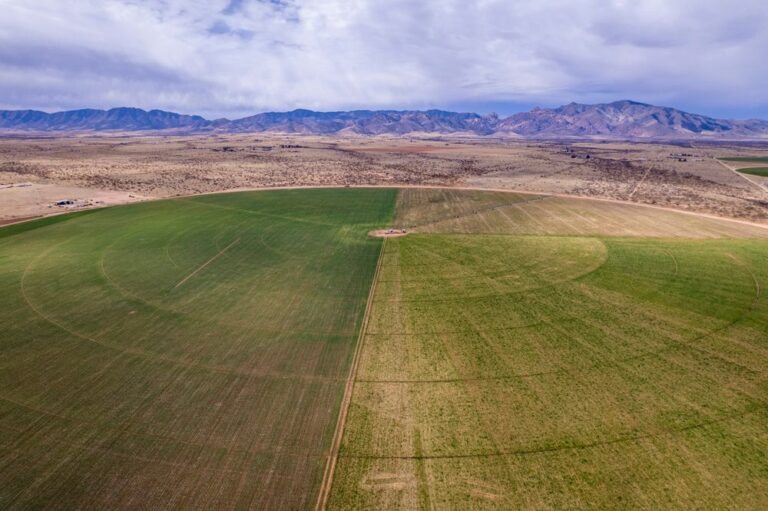
Drones and data to manage each zone of the field. Around 15 years ago, the Perry family began experimenting with tools capable of generating more precise information about crops and soil. The technologies adopted include multispectral imagery captured by drones and variable-rate irrigation systems. The data makes it possible to divide fields into small zones and manage each environment according to its conditions, so that water and other resources are applied only where they are needed. Artificial intelligence is used to analyze large volumes of data from soil, crops and weather, with the aim of detecting risks in advance, responding faster and backing agronomic decisions with up-to-date information.
Matsatsi a beke. Tlosa boingoliso ka ho tobetsa hanngoe.
Soil with greater capacity to hold water. The farm’s regenerative strategy seeks to strengthen biological activity and improve soil structure. According to the experience presented, healthier soil can retain more moisture and supply a larger share of the resources the crop needs. Key practices include multi-species cover crops between seasons and reduced tillage, which cuts fuel consumption, limits soil disturbance and helps conserve moisture. The operation also works to harness organisms present in the environment in order to reduce dependence on insecticides, synthetic fertilizers and other chemical inputs.
Partnerships with technology companies. PepsiCo works with specialized providers — AgroScout, CropX and GRIMME — to bring digital tools and agronomic knowledge to growers. AgroScout uses imagery and deep-learning algorithms to detect and monitor pests and diseases; CropX integrates sensors and data analysis to improve decisions on soil and water use; GRIMME contributes technologies related to the mechanization of the potato chain. The company stresses that these tools are meant to complement the experience of farmers and agronomists, turning field data into practical recommendations rather than replacing human judgment.
More than 60 demonstration farms. PepsiCo operates more than 60 demonstration farms around the world, where growers can observe and evaluate regenerative agriculture practices first-hand. Trials at these sites cover reduced tillage, cover cropping, natural pest management, efficient irrigation and the use of AI to interpret production and environmental data. The Alberta experience is also intended to ease the handover of the farm to a fifth generation of the Perry family. For PepsiCo, the combination of technology, agronomic knowledge and soil recovery can help sustain potato production in the face of increasingly variable climate conditions.
For the wider potato industry, the Alberta case is notable less for any single gadget than for the system approach: a major processor publicly tying its chip supply chain to measurable soil-health and input-reduction practices, and using a long-standing supplier — rather than a corporate showcase farm — as the reference site.